Driving Highway 191 to Big Sky in winter: a survival guide
By Bozeman Proper Staff
February 23, 2026 · 10 min read
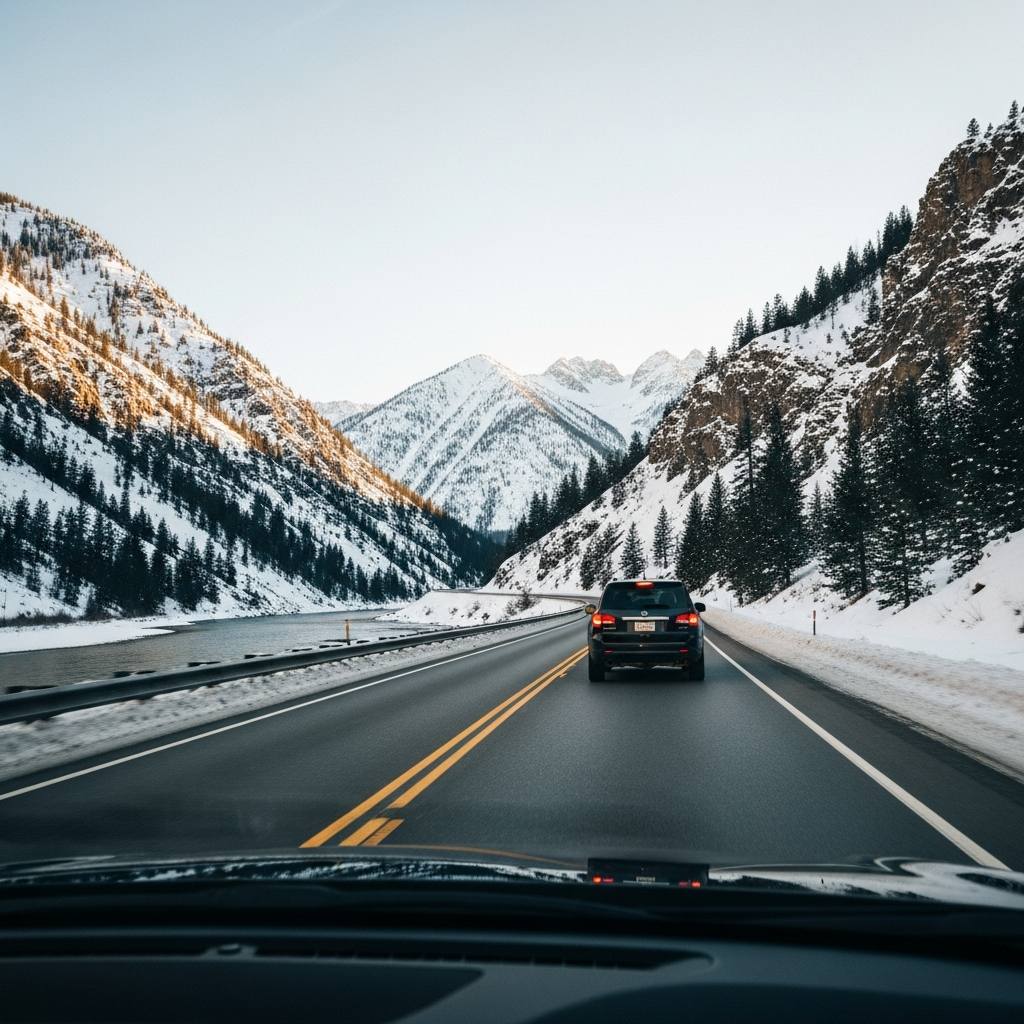
Highway 191 through Gallatin Canyon is the only road between Bozeman and Big Sky. It’s 50 miles of two-lane highway, carved through a narrow river canyon, with no alternate route and no room for error in winter. About 9,000 vehicles drive it every day during ski season. An average of one person dies in a crash here each year.
That’s not meant to scare you out of the drive. Locals do it daily, commuters do it in the dark, and shuttle drivers do it in blizzards. But it demands respect, and tourists who show up expecting a freeway are the ones who end up in the ditch. Here’s everything you need to know before you point a rental car south out of Bozeman.
The route, section by section
The drive breaks down into three distinct segments, each with its own character.
Bozeman to Gallatin Gateway (15 minutes). You’ll head west on Huffine Lane to Four Corners, then south on 191. This stretch is flat, wide, and easy. Speed limit is 60-70 mph. Gas stations, the last Costco, and the last reliable cell signal are all here. Fill your tank and download your maps before you leave this section.
Gallatin Gateway to the canyon narrows (20 minutes). South of Gallatin Gateway, the road enters the Gallatin River valley. The terrain starts to close in and the river appears on your left. The road is still relatively straight but the speed limit drops. You’ll pass Beckman Flats and Storm Castle — a rocky peak on the east side of the canyon near mile marker 66. This section is where winter conditions start to change. The canyon walls shade the road, and ice lingers on bridges and shaded curves long after the sun hits the valley floor.
The canyon narrows to Big Sky turnoff (25-35 minutes). This is the real stretch. The road follows the Gallatin River through tight turns, with canyon walls close on both sides. The speed limit is 60-70 mph but conditions often demand 40-50. No passing lanes. Narrow shoulders. Semi trucks hauling construction materials to Big Sky’s building boom. The turnoff to Big Sky Resort is Highway 64, a right turn heading west. If you miss it, the next turnaround is the Corral Bar a few miles south.
Total drive time: 55-65 minutes in clear conditions, 75-90+ minutes in snow or ice.
Why this road is different from what you’re used to
If you’ve driven I-70 to the Colorado ski resorts, or the canyon roads to Park City or Tahoe, you have a frame of reference but not the right one. Highway 191 is different in ways that catch first-timers off guard.
It’s two lanes the entire way. No median. No jersey barriers. Oncoming traffic is a yellow line away. When a semi comes around a blind curve taking a little more than its share of the road, you feel it.
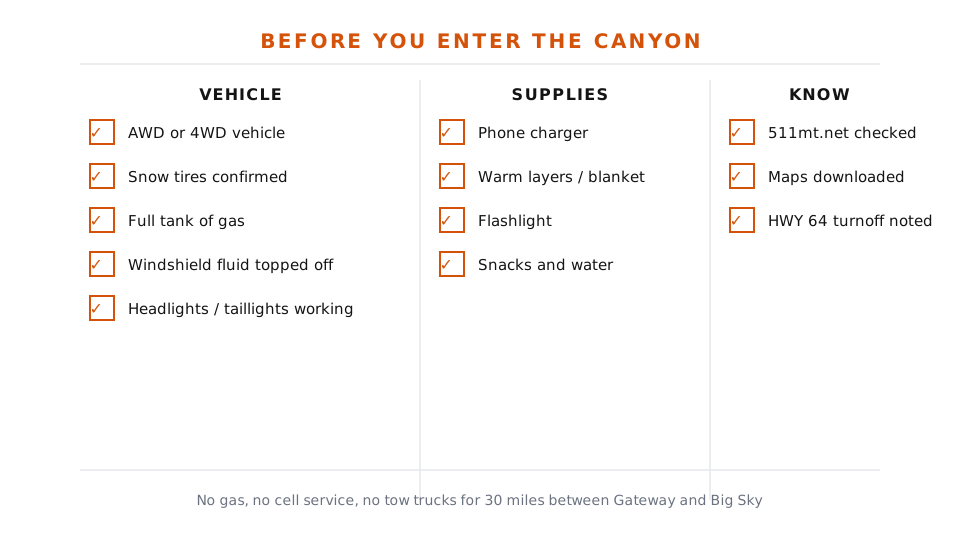
There are almost no services in the canyon. Between Gallatin Gateway and the Big Sky turnoff — roughly 30 miles — there is no gas station, no tow truck waiting at the ready, and no cell service for most of the drive. The 30-mile stretch between Gallatin Gateway and Big Sky has essentially zero reliable cell coverage. Cell service through the canyon is bad on every carrier. Verizon drops between mile markers 47 and 52 and again around mile markers 58-61. T-Mobile is worse. If you slide off the road in the middle of the canyon, you may not be able to call for help. Emergency call boxes exist at a few spots, but they’re sparse.
The river runs right alongside the road. The Gallatin River parallels 191 through the canyon, often just a few feet from the pavement with no guardrail. Going off the right side of the road doesn’t mean hitting a snowbank. It can mean hitting the river.
Wildlife crosses constantly. Elk, deer, moose, and bighorn sheep are real hazards, especially at dawn and dusk. In winter, bighorn sheep graze along the highway shoulders. A 200-pound bighorn standing in your lane at 7 AM in the dark is not a hypothetical.
The rental car problem
Here’s the scenario that plays out dozens of times every winter: a family flies into Bozeman from Texas or Florida, walks up to the Hertz counter, gets handed the keys to whatever midsize sedan is available, and drives into the canyon in a snowstorm. The car has all-season tires, front-wheel drive, and the driver has never seen black ice.
Get AWD or 4WD. This is not optional. Front-wheel drive on all-seasons is sketchy in good conditions and genuinely dangerous on packed snow. Every rental car guide for Bozeman says this, but people still show up expecting it’ll be fine. Book an SUV or AWD crossover. Book it early — inventory thins fast during ski season.
Ask specifically about snow tires. At the counter, don’t ask “is this car winter-ready?” Ask “does this vehicle have snow tires?” Winter-ready is marketing. Snow tires are a measurable difference in stopping distance on ice. Most airport agencies (Enterprise, Hertz, Avis, National, Alamo, Budget) put snow tires on their fleet from November through April, but confirm at pickup.
Know that AWD helps you go, not stop. This is the single most dangerous misconception. All-wheel drive improves acceleration on snow and ice. It does nothing — zero — for braking or turning. A 5,000-pound AWD SUV going 60 mph on ice takes just as long to stop as a sedan. Tires are what keep you safe. AWD just keeps you from getting stuck.
Montana law does not require tire chains on passenger vehicles unless MDOT posts signs specifically requiring traction devices, which is rare on 191. But chains are legal from October 1 through May 31. Most rental companies do not allow chains on their vehicles, so this is mainly a note for people driving their own car.
Check conditions before you leave
MDOT maintains a road conditions system at 511mt.net. You can also call 511 from any phone. Check it before you drive. The system uses a color-coded rating:
- Green (good): Road is clear and dry, or wet. Normal driving.
- Yellow (caution): Scattered snow or ice, reduced visibility. Slow down.
- Orange (serious): Snow-packed, icy, or significant drifting. Experienced winter drivers only.
- Red (closed/extreme): Road may be closed or conditions are extreme.
You can also check the MDOT road cameras, which show real-time images from key points along the corridor. Look for the Gallatin Gateway and Big Sky cameras specifically. A clear morning in Bozeman does not mean clear conditions in the canyon. The two can be completely different weather systems.
Driving tactics that actually matter
Skip the generic winter driving tips. Here’s what specifically matters on this road.
Drive 40-50 mph when it’s snowy, regardless of the speed limit. The posted limit is 60-70. Locals who know every curve and drive this road daily may go faster. You are not a local. The curves in the canyon tighten without warning, and ice patches form where the canyon walls shade the road. Going 45 on a 70-mph road feels slow until you hit a shaded curve with black ice and realize you can actually stop.
Use low beams in snow. High beams reflect off snowflakes and create a white wall of glare. Low beams cut under the snow and let you see the road. This is counterintuitive — your instinct says “it’s dark, use more light.” Fight that instinct.
Leave four to five seconds of following distance. On dry pavement, two seconds is standard. On snow or ice, you need at least double that. The car in front of you will see the moose in the road before you do. You need time to react.
Use pullouts to let faster traffic pass. The canyon has periodic pullouts on the right side. If someone is riding your bumper, pull over and let them go. This is normal canyon etiquette, not a sign that you’re doing something wrong. Locals would rather pass you safely in a pullout than try to pass on a blind curve. It keeps everyone safer.
Don’t panic-brake on curves. If you feel the car sliding on a curve, ease off the gas and steer into the direction you want to go. Slamming the brakes locks the wheels (even with ABS on ice) and turns a manageable slide into a spin. Gentle inputs. Smooth steering. Breathe.
What to have in the car
This is not a wilderness expedition, but the canyon has no services and no cell coverage. A 30-minute wait for a tow truck in town turns into a two-hour wait in the canyon — if you can even call one.
Pack these before you leave Bozeman:
- Full tank of gas. Fill up in Bozeman or at the station in Gallatin Gateway. There’s nothing between Gateway and Big Sky.
- Phone charger and downloaded maps. Cell service dies in the canyon. Download Google Maps or Apple Maps for the area before you leave. Your GPS will work without cell service if the maps are downloaded.
- Warm layers and a blanket. If you’re stuck waiting for help, the car’s heat only lasts as long as the gas does. A blanket and warm jacket mean you’re uncomfortable instead of in danger.
- Flashlight. If you need to check tires, chains, or deal with anything outside the car in the dark, your phone flashlight isn’t enough when it’s 5 degrees and snowing.
- Snacks and water. A two-hour delay isn’t fun. A two-hour delay while hungry is worse.
Timing your drive
When you drive matters almost as much as how you drive.
Best time: mid-morning on a clear day. MDOT plows start early, so by 9-10 AM the road is usually in its best condition of the day. Traffic from the morning commute has thinned. Light is good.
Worst time: Friday afternoon and Sunday afternoon. Friday afternoon is when every skier in the Gallatin Valley heads to Big Sky. Sunday afternoon is when they all come back. Add snow to the mix and you get a slow-moving line of cars through the canyon with frayed nerves and tailgaters. If your flight lands on a Friday afternoon, consider spending the night in Bozeman and driving Saturday morning instead.
Risky time: after dark. The canyon has no street lights. In winter, the sun sets by 5 PM in December and January. After dark, you’re relying entirely on headlights to spot ice, wildlife, and other vehicles. It’s doable — thousands of people do it — but if you have a choice, drive in daylight.
The return trip is worse. Driving south toward Big Sky, you’re fresh off the plane, awake, and alert. Driving north back to Bozeman after a ski day, you’re tired, your legs are shot, and it’s probably getting dark. Leave Big Sky earlier than you think you need to.
If something goes wrong
You slide off the road: If you’re in a safe position (not blocking traffic, not in the river), stay in the car with your hazards on. Try to call 911 — even without cell service, emergency calls can sometimes connect to the nearest tower. If you can’t get through, wait. Other drivers will see you and stop, or flag someone down at the next pullout. In ski season, traffic is constant.
You see a car in the ditch: If you can safely pull over at a pullout (not on the road shoulder), stop and check on them. Many people in the canyon don’t have cell service. If they need help, you might be the only person who can relay a message to the next cell tower.
You hit wildlife: Pull over when safe, turn on hazards. Do not approach the animal. Call 911 if you have service, or Montana Fish, Wildlife & Parks. Report the collision at the next opportunity.
Whiteout conditions: If visibility drops to where you can’t see the road, slow way down and find a pullout. Do not stop on the road. If no pullout is available, keep moving slowly with hazards on until you find one. Other drivers behind you can’t see you either.
Skip the drive entirely
If this article has you reconsidering, there’s no shame in that. The shuttle options from Bozeman to Big Sky exist specifically for people who don’t want to deal with this road.
Karst Stage and Big Sky Shuttle run the canyon every day in every condition. Their drivers know every curve, their vehicles are equipped for the worst conditions, and you can sit in the back and enjoy the scenery instead of white-knuckling the steering wheel. The Skyline bus runs the same route for $5 each way during ski season. For the full breakdown of every option, see our airport-to-Big-Sky transport guide.
If you’re staying at Big Sky for your whole trip and don’t need a car at the resort, a shuttle is the smarter play. Save yourself the stress and the rental car expense. Use Big Sky’s free resort shuttle system to get around once you’re there.
Highway 191 through Gallatin Canyon is a gorgeous drive — the Gallatin River, the canyon walls, the mountains opening up as you approach Big Sky. Thousands of people drive it safely every winter day. But it’s not a freeway, it’s not forgiving, and it’s not the place to learn how to drive in snow. Get the right vehicle, check the conditions, fill your tank, download your maps, and drive slower than you think you need to. The mountain will still be there when you arrive.
More in logistics
Buying a Montana Fishing License: Costs, Rules, and Logistics for Nonresidents
By Bozeman Proper Staff
Where to Go for Urgent Care, Pharmacies, and Medical Help in Bozeman & Big Sky
By Bozeman Proper Staff
Bozeman airport security wait times and how early to arrive
By Bozeman Proper Staff
Where to park in downtown Bozeman (free lots, the garage, and what not to do)
By Bozeman Proper Staff