Visiting Bozeman in Mud Season (April & May): What's Actually Open
By Bozeman Proper Staff
March 13, 2026 · 8 min read
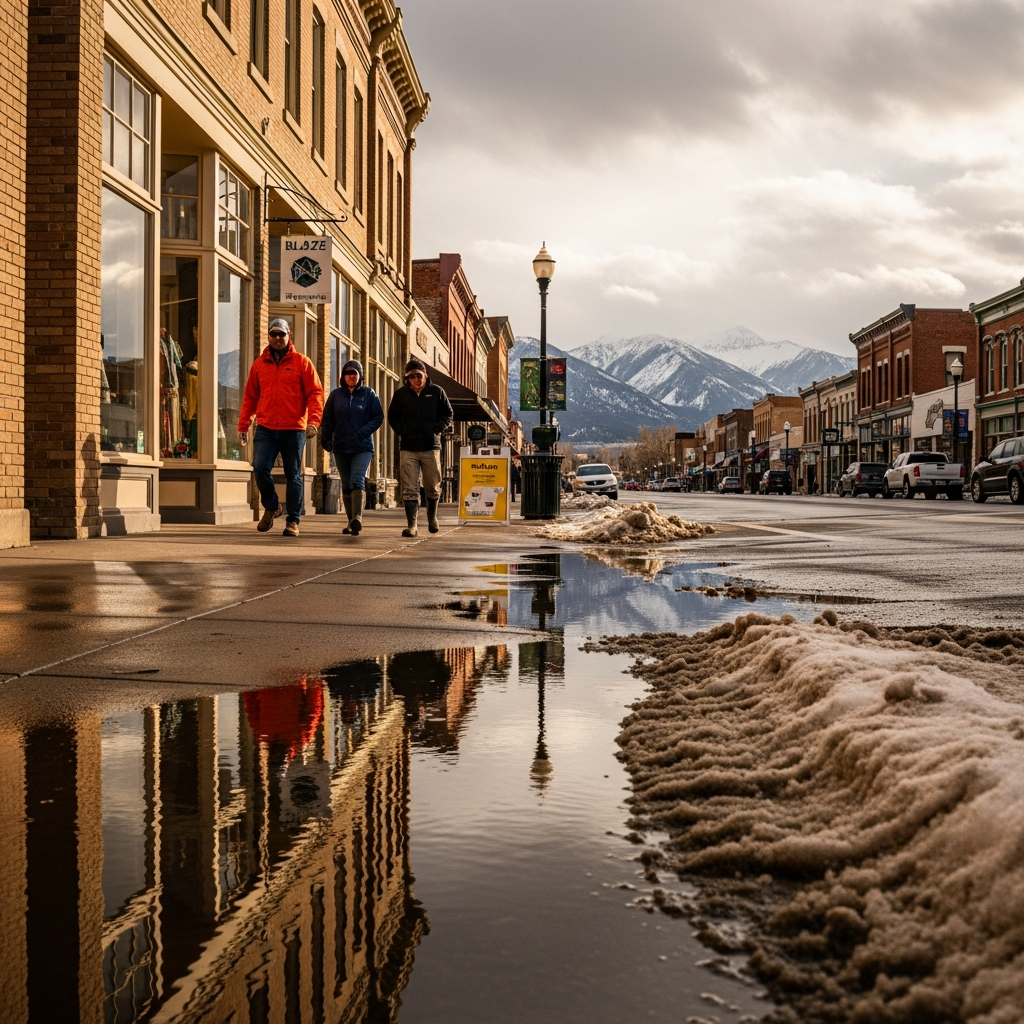
Bozeman’s mud season runs from mid-April through late May, and it will wreck your hiking plans. Most trails above 6,000 feet are a soggy mess, Hyalite Canyon Road is gated shut, and Bridger Ridge still has snow on it. That’s the honest answer.
But here’s the thing: if you’re okay shifting your trip from “epic trail days” to “cheap lodging, zero crowds, and the best fly fishing window of the year,” mud season might actually be worth booking.
What mud season actually looks like
Mud season happens when the winter snowpack starts melting onto ground that’s still partially frozen. The water has nowhere to go, so trails turn into shin-deep soup. Add spring rain on top of that (May is Bozeman’s wettest month, averaging 2.83 inches across 18-19 rain days), and you get conditions that are genuinely impassable on most backcountry trails.
The Gallatin Valley Land Trust spends around $50,000 every year repairing trail damage from people hiking through mud season conditions. When they ask you to stay off the trails, they’re not being dramatic. Your boots carve ruts that channel water and erode the trail surface for the rest of the year.
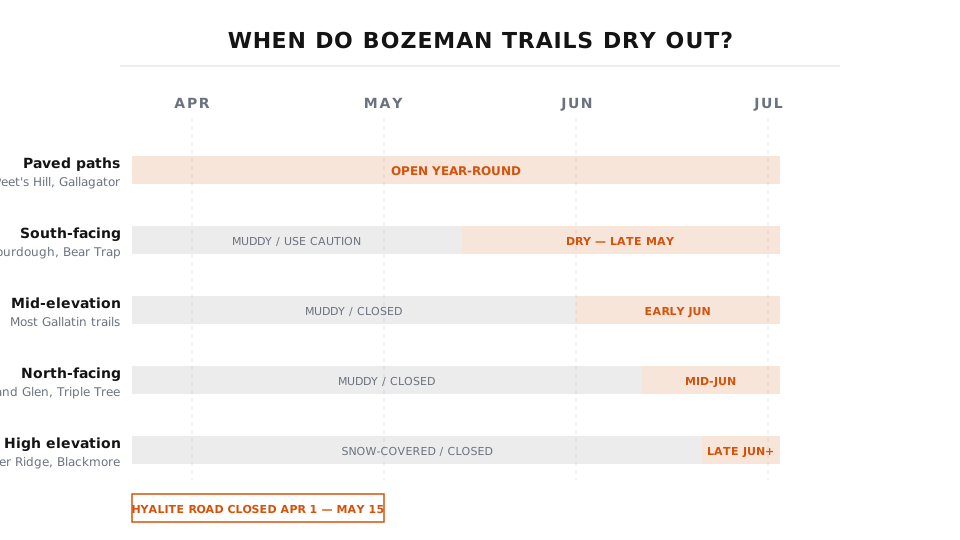
The worst of it hits mid-April through late May. Lower south-facing trails start drying by Memorial Day. Most mid-elevation trails firm up in early June. North-facing trails like Highland Glen and Triple Tree? Those don’t dry until mid-June some years.
What’s closed
Let’s get the bad news out of the way.
Hyalite Canyon Road closes every year from April 1 through May 15. This is a hard closure — the road is gated and there’s no getting around it. Palisade Falls, Hyalite Lake, and all the trailheads up that road are off-limits.
Bridger Ridge is snow-covered into June. It’s not a spring option regardless of how warm the weather feels in town.
Highland Glen, Triple Tree, and Painted Hills are the slowest trails to dry in the valley. The Gallatin Valley Land Trust specifically asks people to avoid these trails in spring because they’re the most erosion-prone.
Most Forest Service access roads to backcountry trailheads are gated shut through mud season. Even if you have a vehicle that could handle the conditions, the gates aren’t open.
If your trip is built around hiking, reschedule to late June or later. That’s the straightforward answer, and I’m not going to sugarcoat it.
What IS open (and it’s more than you’d think)
Fly fishing is in prime season
This is the insider move. While hikers are staring at closed trailheads, anglers are having the best fishing of the year. The Gallatin and Madison Rivers offer excellent pre-runoff conditions in April and early May. The water is clear, the pressure is nonexistent, and the fish are hungry after winter.
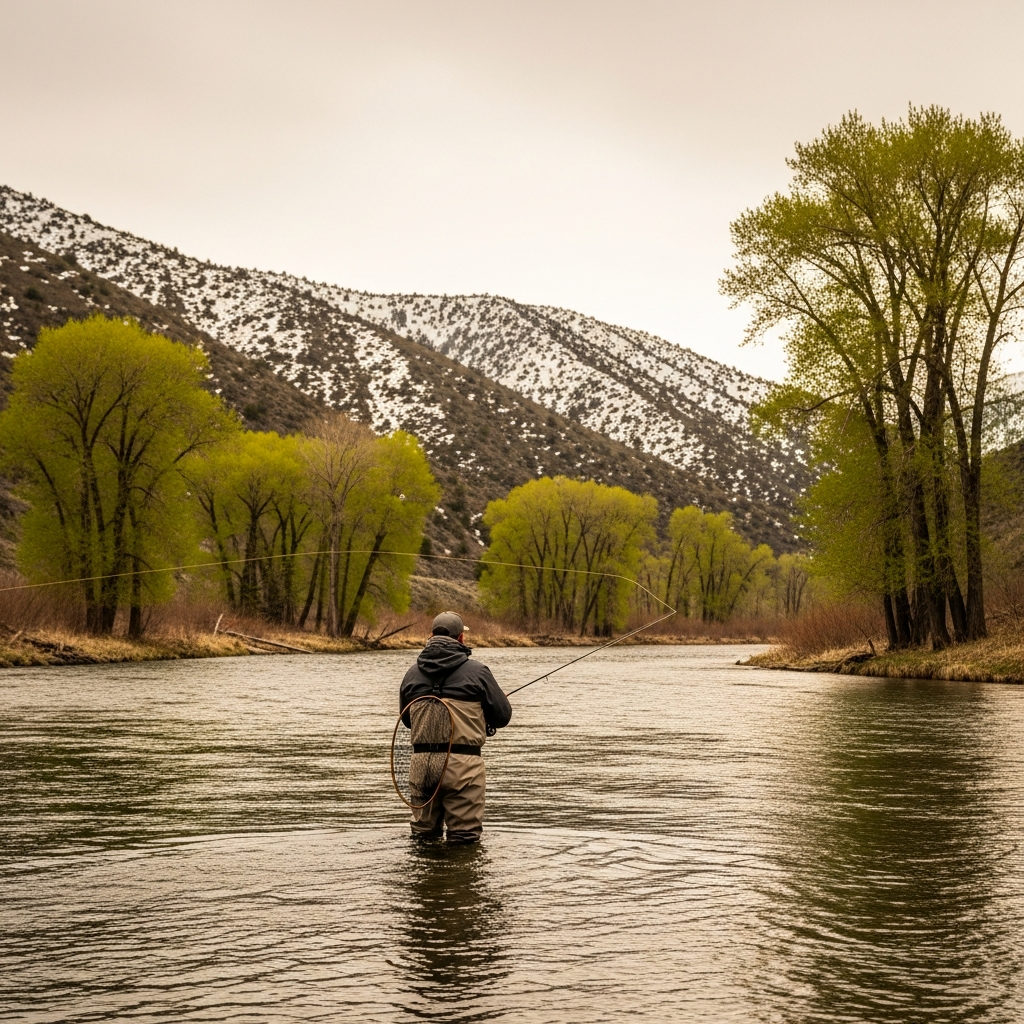
The real prize is the Mother’s Day Caddis hatch, which typically happens in late April through mid-May on the Yellowstone River near Livingston (45 minutes from Bozeman). It’s one of the most famous dry fly hatches in the West, and it happens right in the middle of mud season. That’s not a coincidence — it’s why locals love this time of year.
Hot springs hit different in spring
Sitting in 104-degree water while rain falls on your face and steam rises into cold air is one of the best experiences you can have in Montana. Three options within driving distance:
- Bozeman Hot Springs — 12 pools, 10 minutes from downtown. Indoor and outdoor options. Live music on Sunday and Thursday nights.
- Chico Hot Springs — 30 miles south in Paradise Valley. Worth the drive for the setting alone.
- Norris Hot Springs — 45 minutes west, open-air pool fed by a natural 120-degree spring. Small, rustic, and genuinely great.
For the full breakdown on each spot, check out our hot springs guide.
Museum of the Rockies
The museum is open year-round and houses one of the largest collections of dinosaur fossils in the world (including a T. rex skull). It’s the single best indoor attraction in Bozeman and the one thing every visitor should do regardless of season. Plan for 2-3 hours. See our complete Museum of the Rockies guide for timing tips and what not to miss.
Downtown Bozeman is fully open
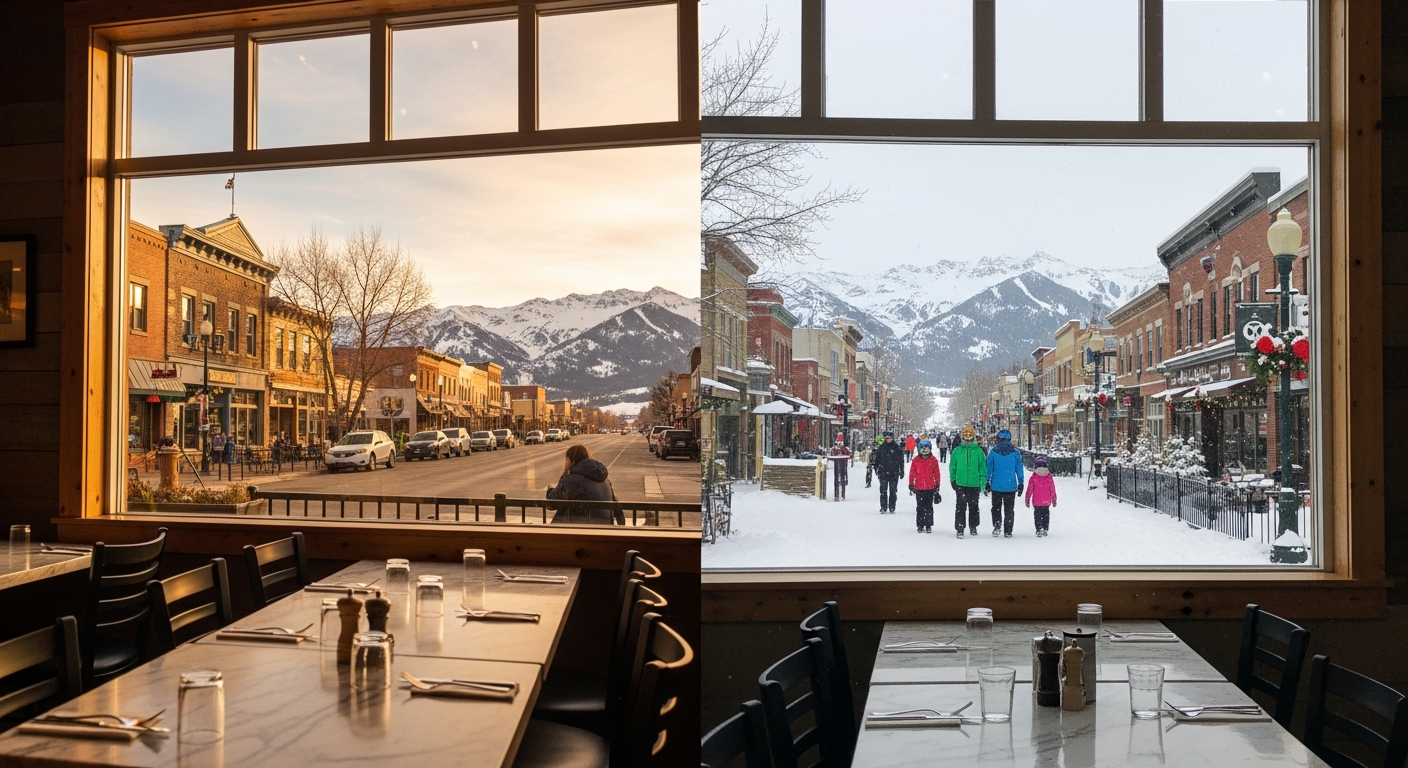
Here’s what tourists don’t realize about Bozeman: it’s a real town, not a resort. Most restaurants and shops stay open year-round because 55,000 people live here and need to eat.
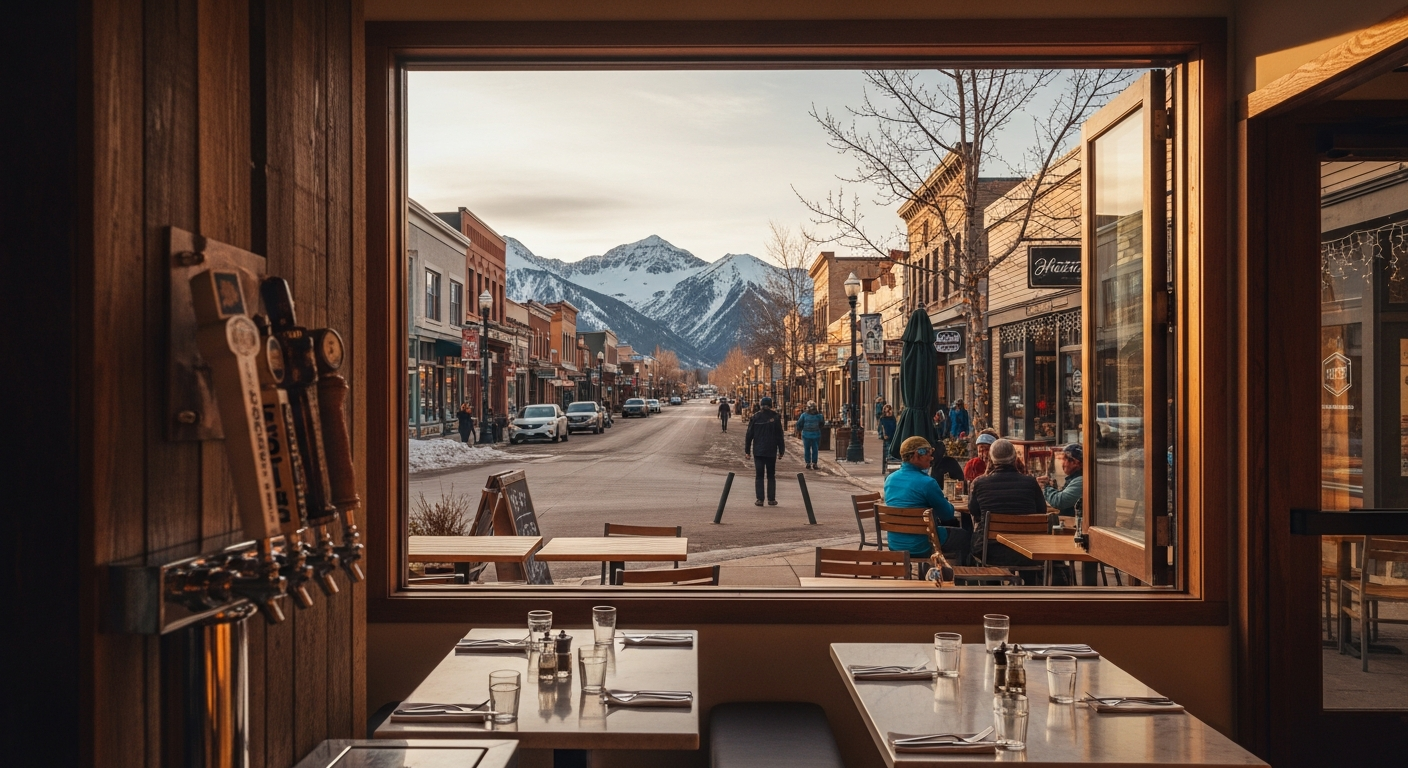
The upside of visiting in mud season is that you’ll get into every restaurant without a wait. That reservation at one of Bozeman’s best restaurants that requires a two-week advance booking in July? Walk-in table in April.
A few things to know:
- Most restaurants keep their full hours through spring. A handful reduce hours or take brief maintenance closures.
- Westward Social is a known seasonal closure — they reopen in early June.
- Big Sky-area restaurants are more likely to close between ski and summer seasons. Bozeman proper stays open.
Breweries have zero wait times
Bozeman has close to a dozen breweries, and in mud season every one of them is relaxed, uncrowded, and happy to see you. Bridger Brewing is the standout for food and beer quality. You won’t wait 45 minutes for a table like you would in August.
Trails that actually work in spring
You’re not completely locked out of the outdoors. These lower-elevation or paved options dry earlier and handle spring moisture better:
- Peet’s Hill / Burke Park — Paved paths with panoramic valley views. Dry year-round.
- Gallagator Trail — Flat, paved, connects downtown to Museum of the Rockies. Good for a morning walk.
- Main Street to the Mountains paved paths — The town’s paved trail network stays usable through mud season.
- Sourdough Trail — Lower elevation, south-facing, tends to dry earlier than most.
- Lewis and Clark Caverns (45 min west) — Underground, so weather doesn’t matter. Tours run May through September.
- Bear Trap Canyon (45 min west) — Lower elevation canyon along the Madison River. Often accessible earlier than Gallatin trails.
If you’re traveling with kids, our family-friendly hikes guide covers paved and stroller-accessible options that work even when higher trails are closed. Montana Trail Briefs also has a useful early-season hiking guide that covers what to expect as the snowpack melts.
Other indoor options
- Emerson Center for the Arts & Culture — 35+ galleries and studios in a converted school. Free to walk through.
- American Computer Museum — Surprisingly good. Covers computing history from the abacus to AI.
- Spire Climbing Center — Indoor climbing gym. Good option when you have energy but no dry trails.
- Rialto and Ellen Theatre — Live music, film screenings, and performances year-round.
- Bozeman Public Library — One of the best small-town libraries in the state. Coffee shop inside.
For a longer list of indoor options, our rainy day guide covers 15 activities that work perfectly in mud season too.
Weather: pack for four seasons in one day
This isn’t an exaggeration. April in Bozeman averages 48°F for highs and 26°F for lows, with a 40% daily chance of some kind of precipitation. May warms up to the upper 50s and low 60s but is the wettest month. You can get sunshine, rain, sleet, and snow in a single afternoon.
What to pack:
- Waterproof boots (not hiking boots — actual waterproof, rubber-soled boots)
- Rain jacket with a hood
- Down jacket or heavy fleece for mornings and evenings
- Layers you can peel off when the sun comes out at noon
- Sunscreen and sunglasses (4,800 feet of elevation means intense UV even when it’s cold)
- Hat and gloves for early mornings
The 30-40 degree temperature swing within a single day is real. Leave the hotel at 7 AM in a down jacket, strip to a t-shirt by 1 PM, put the jacket back on by 5 PM.
The deal: lodging is genuinely cheap
Here’s the actual reason to consider mud season. Summer vacation rental rates in Bozeman hit $278-$332 per night at peak. In April, those same properties run 25-40% below peak pricing. Budget hotels drop to $57-$71 per night.
May prices start climbing as Yellowstone’s opening date approaches and the weather improves, but April is the sweet spot. If your trip is primarily about eating well, drinking good beer, soaking in hot springs, and fly fishing — and you couldn’t care less about hiking — April gives you everything you want at summer prices minus a third.
You’ll still want a rental car. Uber and Lyft exist in Bozeman but aren’t reliable enough to be your primary transportation, especially for reaching hot springs and fishing access points. Check our rental car guide for company comparisons and tips.
Events worth knowing about
The event calendar thins out compared to summer, but it’s not empty:
- Bridger Bowl closing day — Usually around the second weekend of April. A party atmosphere for the last ski day of the season.
- ArtWalk at the Emerson — Every second Friday. Free gallery crawl through 35+ studios.
- Bozeman Hot Springs live music — Sunday and Thursday nights year-round.
- Ellen Theatre screenings and performances — Check their calendar for the current lineup.
- Farmers Market — The summer Saturday market doesn’t start until mid-June, but smaller pop-up markets occasionally run in May.
Can you still do Yellowstone?
Yellowstone’s north entrance (through Gardiner, via Livingston) stays open year-round. The road from Mammoth to Cooke City is always accessible. But most of the park’s interior roads don’t open until late April at the earliest, and some don’t open until late May.
If you’re visiting in April, you’ll be limited to the northern section of the park — Mammoth Hot Springs, Lamar Valley (which is spectacular for wildlife in spring), and the road between them. That’s still worth doing. Check our Yellowstone day trip guide for route options.
By late May, more roads open and the park becomes fully accessible. If Yellowstone is a priority, aim for the last week of May to get the best overlap of open roads and pre-summer pricing.
When to visit instead
If your heart is set on hiking: come in late June through September. Our month-by-month guide breaks down the trade-offs for every time of year.
If you’re flexible and want the cheapest trip possible with solid indoor and water-based activities: April is your month. Book a hotel downtown, schedule a guided fishing trip, hit every hot spring within an hour, eat at restaurants you’d never get into during summer, and save yourself a few hundred dollars on lodging.
Mud season isn’t for everyone. But if you know what you’re getting into, it’s one of the best-kept deals in Montana.