Big Sky Resort: Everything You Need to Know Before Your First Visit
By Bozeman Proper Staff
February 6, 2026 · 18 min read
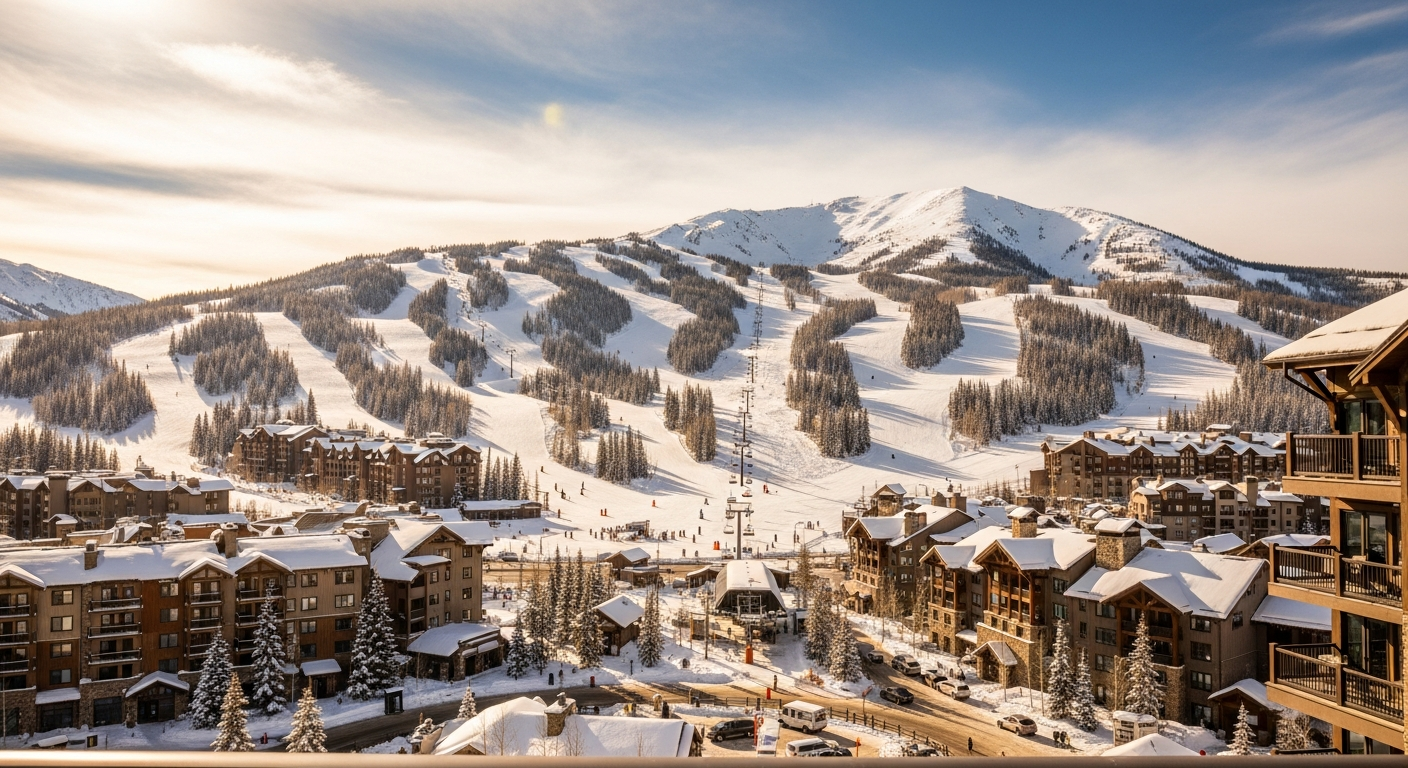
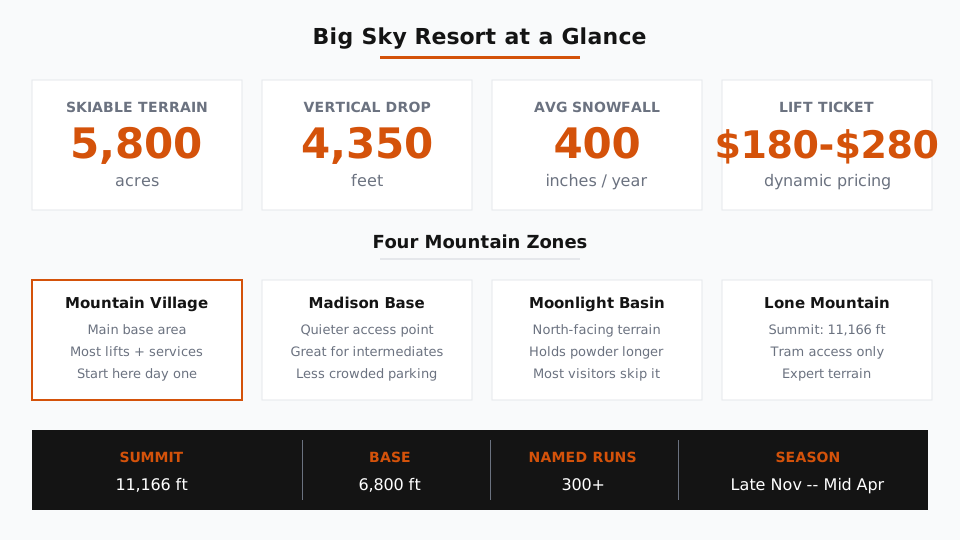
Big Sky Resort has the most skiable terrain in America. That is not marketing copy — it is 5,800 acres of lift-accessed skiing spread across four connected mountains, with a vertical drop of 4,350 feet and an average of 400 inches of snowfall per year. It is also one of the least crowded major resorts in the country, which means you will ski more runs per day here than you would at Vail, Park City, or any of the Colorado mega-resorts where you spend half your day in lift lines. The trade-off is that Big Sky is not a walkable ski village with dozens of restaurants and bars. It is a Montana ski mountain that happens to have some lodging and dining at its base. Set your expectations accordingly and you will have one of the best ski trips of your life.
Understanding the mountain layout
Big Sky’s terrain breaks into four main areas: the Mountain Village base area (your home base with the most lifts and services), the Madison Base Area (quieter, good for intermediates), Moonlight Basin (wide-open cruisers and expert terrain on the north side), and Lone Mountain itself (the iconic peak with Big Couloir and the tram). First-timers should spend day one on the Mountain Village side. Take the Ramcharger 8 — the first heated, high-speed eight-person chair in North America — to access a huge network of groomed blue runs off the Andesite and Swift Current areas. This is where you learn the mountain’s rhythm without getting in over your head.
The Moonlight side deserves attention by day two or three. The north-facing terrain holds snow better, the runs are wider, and the crowds are thinner because most day visitors never bother crossing over. Take the Iron Horse lift to get there. If you are an intermediate skier, the groomers off the Six Shooter lift are some of the best cruising runs on the entire mountain.
Getting there
The drive from Bozeman Yellowstone International Airport to Big Sky is about 50 miles, mostly along Highway 191 through Gallatin Canyon. In dry conditions it takes roughly an hour. In a snowstorm, give yourself 90 minutes and do not attempt it in a two-wheel-drive sedan. You want AWD or 4WD. Period. For a full breakdown of shuttles, rental cars, and private transfers, check out our guide to getting from the airport to Big Sky.
Once you are at Big Sky, the Skyline bus system runs free shuttles between the Mountain Village, Meadow Village, and Town Center areas throughout ski season. The buses run every 15-20 minutes during the day and are the easiest way to get between your lodging and the slopes if you are not staying slopeside. Do not assume you can walk between these areas — the Meadow Village is a five-minute drive from Mountain Village, and walking that road in ski boots at 15 degrees is nobody’s idea of fun.
Lift tickets, Ikon Pass, and the money question
A single-day walk-up lift ticket at Big Sky can run north of $250 in peak season, which is obscene but standard for destination resorts in 2026. Big Sky uses dynamic pricing, so that number fluctuates. Mid-week days in January might dip to $180-$200, while Presidents’ Day weekend can push past $280. The cheapest approach is always to buy online in advance — tickets purchased 7+ days out are typically $30-$50 cheaper than the same-day price.
The Ikon Pass is the clear move if you ski more than three or four days per year anywhere on its resort network. Ikon Base gets you five days at Big Sky with blackout dates; Ikon Full Pass gets you seven with no blackouts. Buy it in the spring for next season — prices jump $200+ once fall rolls around. For a full comparison of how the costs shake out between Big Sky and the local alternative, read our Bridger Bowl vs. Big Sky breakdown.
If you are only skiing Big Sky once, buy tickets on the resort’s website at least 7 days in advance for the multi-day discount. A three-day pass bought ahead usually saves you $40-$60 compared to three single-day tickets. Never buy a single-day ticket at the window.
Ski rentals: on-mountain vs. delivery
Big Sky has multiple rental shops in the Mountain Village, including the resort-operated Big Sky Sports. They are convenient but you will pay resort prices — expect $60-$80 per day for a standard adult ski package and $80-$100+ for demo or performance gear. The process involves standing in a crowded rental shop at 8:30 AM while a tech adjusts your bindings, which is not how anyone wants to start a ski day.
The better option, in my opinion, is a delivery rental service. Black Tie Ski Rentals will bring gear directly to your condo or hotel the evening before your first ski day. A tech shows up, fits everything, adjusts it, and leaves it with you. When you are done with your trip, they pick it up. The per-day cost is similar to the on-mountain shops, sometimes cheaper, and you skip the morning rental line entirely. Powder Addiction and Big Sky Ski Rentals are two other delivery outfits that operate in the area.
If you own your own boots but need skis, most shops rent skis-only packages. Bring your own boots whenever possible — nothing ruins a ski trip faster than rental boots that do not fit your feet.
Lessons and kids programs
Big Sky’s ski school runs programs for all ages and ability levels. A full-day adult group lesson costs around $200-$250 and includes a lift ticket, which makes it one of the better values at the resort for beginners who would be buying a lift ticket anyway. Private lessons run $700-$1,000+ for a full day, which is steep, but splitting a private between two or three people of similar ability is the best way to improve quickly.
For kids ages 3-14, the Big Sky Mountain Sports School offers full-day programs that combine instruction with supervised skiing. Expect to pay $200-$300 per day per kid. The programs fill up fast during holiday weeks, so book at least two weeks ahead for Christmas, New Year’s, and Presidents’ Day. One tip: the morning drop-off line at the kids’ center gets long. Arrive by 8:30 AM or you will spend your first lift of the day in a registration line instead of on the mountain.
Beginners get a dedicated learning area at the base with a magic carpet and the Explorer lift, which serves gentle green terrain without dumping you into traffic from the upper mountain. It is a well-designed setup. Most adults with decent athleticism can move from the magic carpet to green runs on the Explorer chair within a couple of hours.
Where to stay
The Mountain Village has the most convenient slopeside lodging, but “convenient” here means walking distance to lifts, not walking distance to a real town. The Huntley Lodge is the original resort hotel and puts you right at the base. The Summit Hotel is newer and nicer. For a deep look at what’s genuinely slopeside versus what’s just marketed that way, read our guide to ski-in ski-out lodging at Big Sky.
For condo-style lodging, the Shoshone and the Village Center units offer kitchen access, which matters because dining out at the resort every meal will drain your budget fast. A ground-floor Shoshone unit with direct slope access is the sweet spot for most ski trips — you get a kitchen, a washer and dryer, and you can ski to your door.
The Meadow Village, about five minutes down the road, has more affordable options and a few solid restaurants. Do not stay in Bozeman and commute to Big Sky unless you enjoy starting every ski day with a 50-minute drive through Gallatin Canyon.
Dining on the mountain
Here is the honest truth about eating at Big Sky: it is a resort, and resort food costs resort money. A burger and a beer at most on-mountain spots will run you $25-$35. That said, some places are worth it and some are not.
Everett’s 8800, at the top of the gondola, is the best on-mountain restaurant. The food is legitimately good — not just “good for a ski lodge” — and the views of the Spanish Peaks are the best you will get without skinning uphill. Make a reservation for lunch. Yellowstone Mine at the Huntley Lodge does big portions of comfort food and is a solid call after a hard day. Montana Jack at the base is the default apres spot — deck beers in the sun, nothing fancy, exactly what you want.
The places to skip: the quick-serve cafeterias at the base. The food is mediocre, the lines are brutal during the 11:30-1:00 window, and you can do better. If your lodging has a kitchen, pack sandwiches and eat on a bench outside. You will save $50 per person per day and spend more time skiing.
For a proper night out after skiing, the options at Big Sky are limited but functional. For the full rundown on where to drink after a day on the mountain, check out our guide to apres-ski bars.
The multi-day strategy: mixing Big Sky and Bridger
Here is a move that most first-time visitors miss. If you are skiing for four or five days, do not ski Big Sky every single day. Mix in a day or two at Bridger Bowl, which is 20 minutes from Bozeman and roughly half the cost. Bridger is a nonprofit ski area with some of the best expert terrain in Montana, and the snow is often better because the north-facing aspect holds powder longer.
The smart play for a five-day trip: ski Big Sky for three days on a multi-day ticket, drive into Bozeman for one night mid-trip, ski Bridger for a day or two, then head back to Big Sky to finish. You will save $100-$200 on lift tickets, get to see a completely different style of Montana skiing, and spend an evening in actual Bozeman — which has far better restaurants and bars than the Big Sky base area.
When to go
Big Sky’s season typically runs from Thanksgiving weekend through mid-April. The sweet spots are January and early March. January has the most consistent cold temperatures, which means the best snow conditions and the smallest crowds. Early March brings longer days, warmer temps, and spring skiing conditions that let you ski in a shell instead of a parka. The snow quality is usually still excellent.
Avoid Presidents’ Day week and Christmas week unless you have no choice. Lift ticket prices peak, lodging rates spike, and the normally empty lift lines actually form. Spring break weeks in March can also get crowded depending on which school districts are off. For a month-by-month look at what each time of year is like, read our guide to when to visit Bozeman.
If downhill is not your thing — or you want a mellow day between big days on the mountain — the Bozeman area has excellent cross-country skiing options worth considering.
Common first-timer mistakes
The biggest mistake is underestimating the tram line for Lone Mountain. On a powder day, the line for the Lone Peak Tram can exceed two hours. If skiing the summit is a priority, be in the tram line by 8:45 AM. The second mistake is not bringing layers — Big Sky sits at 7,500 feet at the base, and Lone Peak’s summit is 11,166 feet. Temperature differentials of 20-30 degrees between base and summit are normal.
The fifth mistake is not planning for parking. The Mountain Village lots fill up on weekends and holidays, and overflow parking means a shuttle ride that adds 15-20 minutes to your morning. On powder days, arrive before 8:30 AM for a spot in the main lot. We’ll have a detailed Big Sky parking guide coming soon covering lot locations, timing, and the free shuttle system.
The third mistake is skipping Moonlight Basin. Some of the best intermediate and advanced terrain on the entire mountain is on the north-facing Moonlight side, and most day visitors never make it over there because they stay in the Mountain Village zone. Take the Iron Horse lift over and explore.
The fourth mistake is not budgeting for the full cost. A lot of people look at the lift ticket price and think that is the main expense. It is not. Between lodging ($200-$600+ per night), food ($50-$100 per person per day if you eat out), rentals ($60-$80 per day), and transportation, a four-day trip for two people easily runs $3,000-$5,000. Knowing that number upfront beats getting surprised by your credit card statement in February.
Your best first move is to buy your lift tickets online today, book your lodging in the Mountain Village or Meadow Village area, and set a daily food budget before you arrive. Everything else falls into place once those three things are locked in.
More in winter & ski
Using Your Ikon Pass at Big Sky: Days, Blackouts, and Tram Access
By Bozeman Proper Staff
The Reality of Big Sky Lift Ticket Prices (And How to Avoid Paying $250+ a Day)
By Bozeman Proper Staff
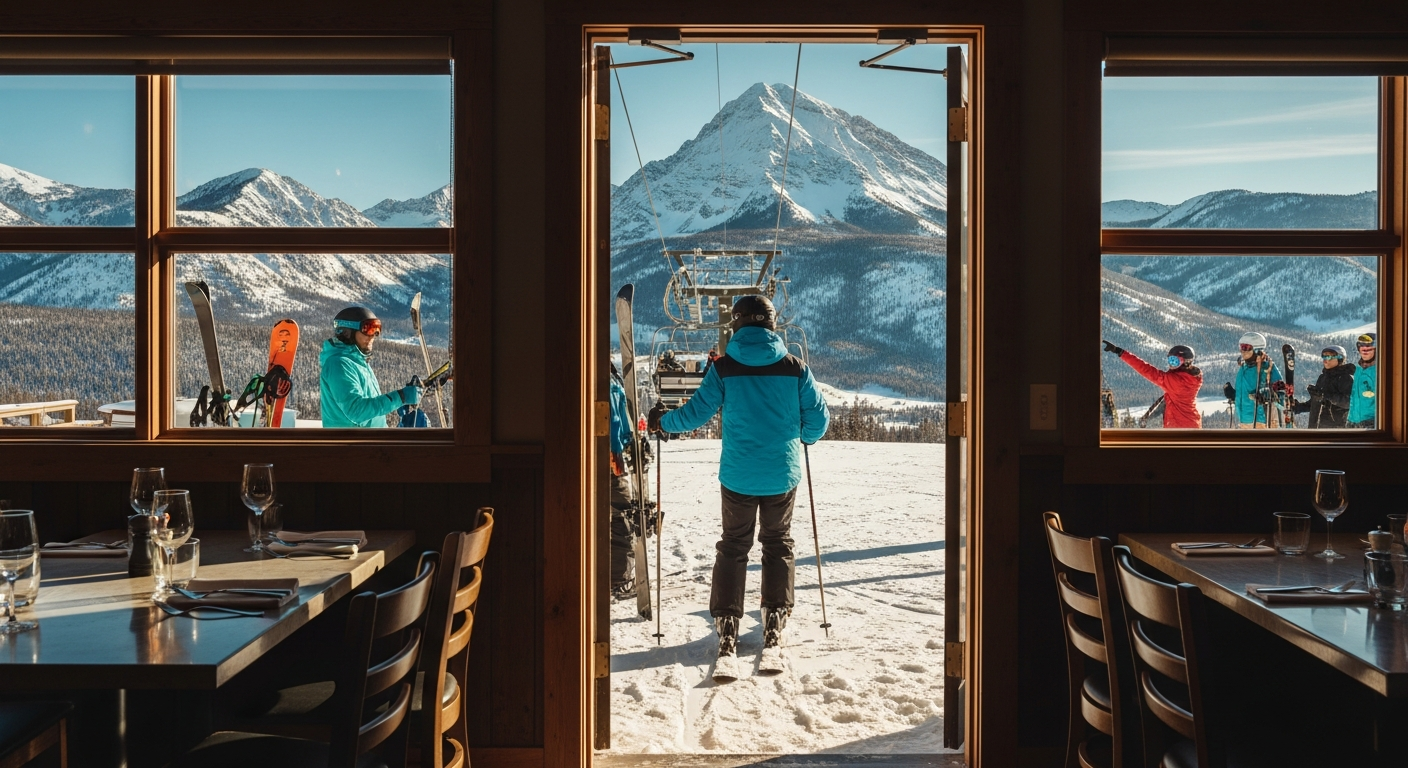
Bridger Bowl vs. Big Sky: A Local's Honest Take
By Bozeman Proper Staff
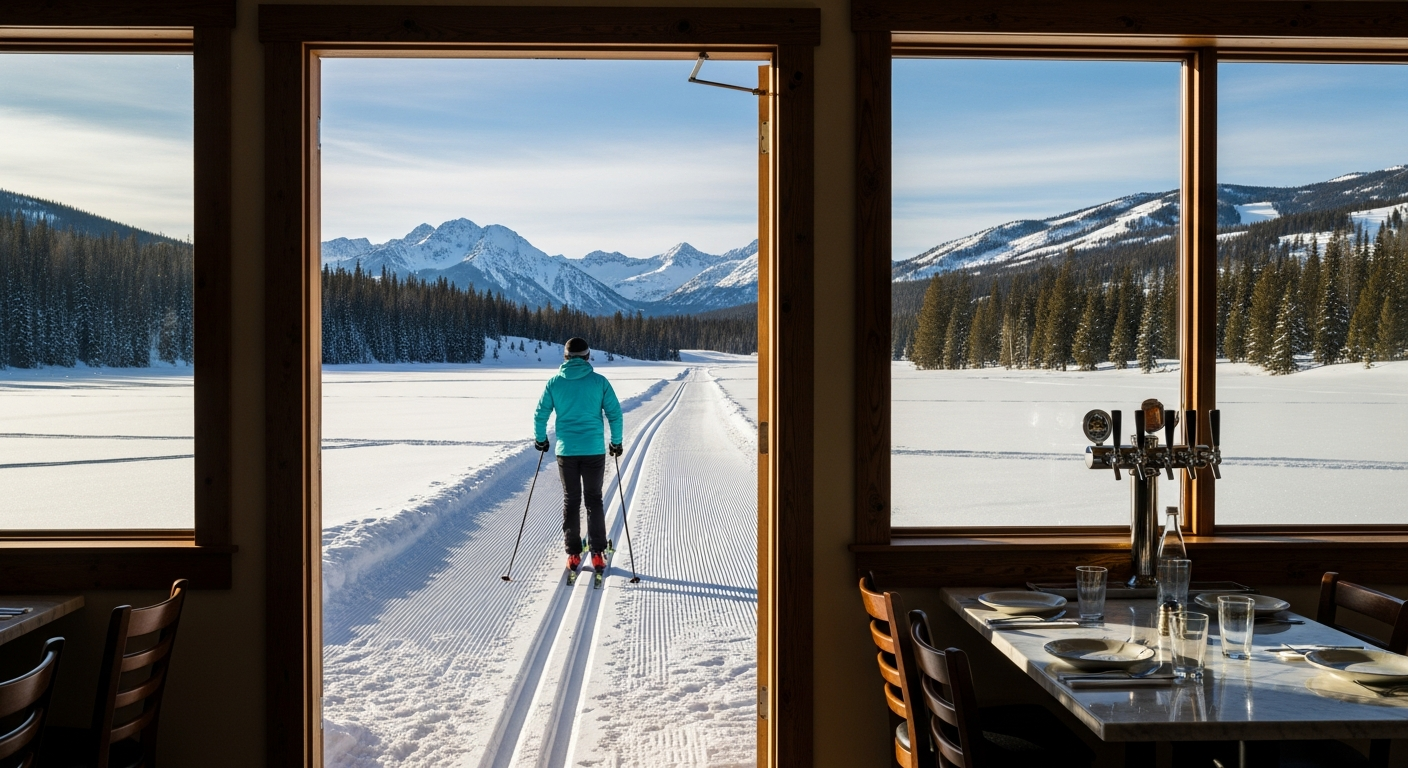
Where to Cross-Country Ski Near Bozeman
By Bozeman Proper Staff