Ski-In Ski-Out Lodging at Big Sky: What's Actually Worth It
By Bozeman Proper Staff
February 7, 2026 · 9 min read
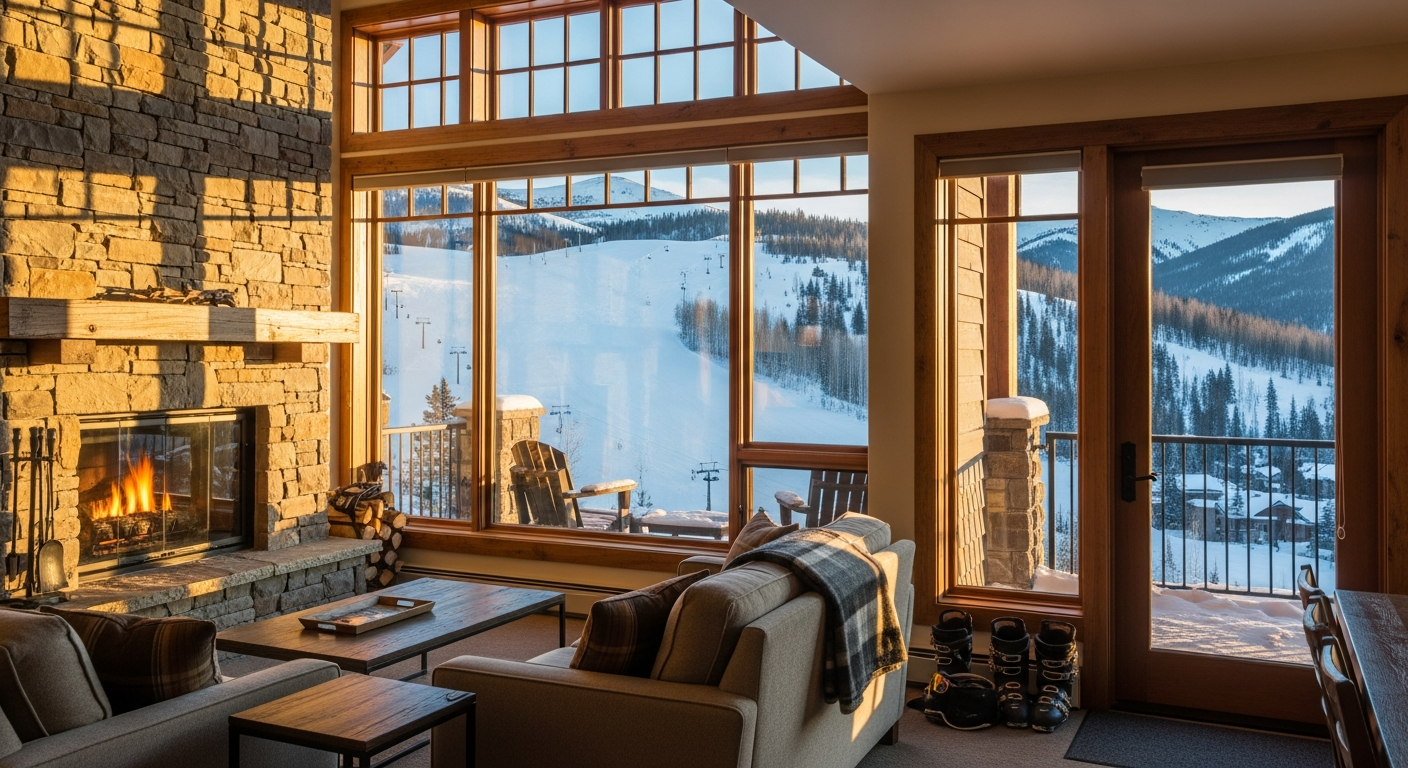
“Ski-in ski-out” is one of the most abused phrases in mountain real estate marketing, and Big Sky is no exception. Half the properties that claim slopeside access actually require a five-minute walk in ski boots to a slow chair, which barely counts. The genuinely ski-in ski-out options at Big Sky Resort are concentrated in three areas: the Mountain Village base, the Summit Hotel area, and a handful of slope-adjacent condos along the lower mountain. Everything else involves a shuttle, a walk, or creative interpretation of the word “access.”
The real ski-in ski-out options
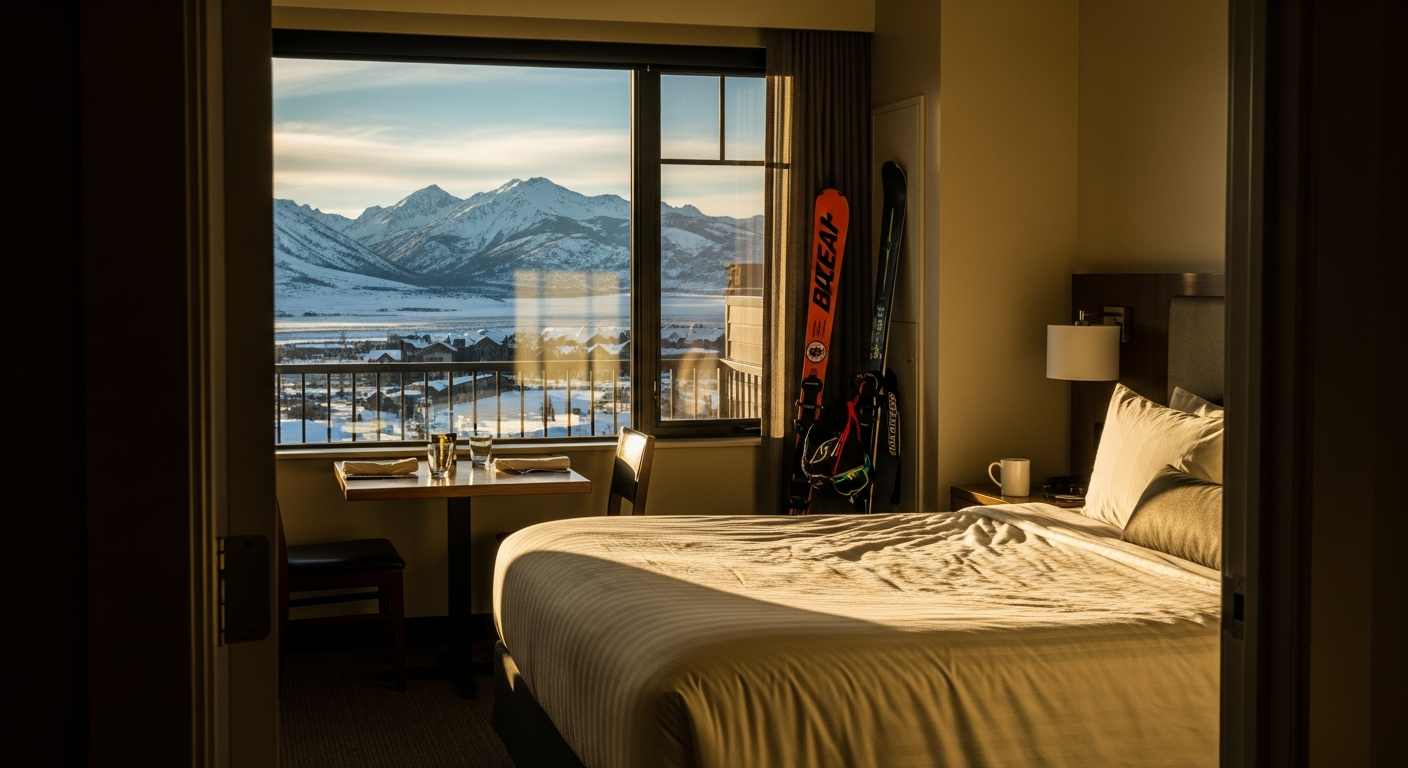
The Summit Hotel is the most legitimate ski-in ski-out property at Big Sky. You step out of the building and you are on the Swiftcurrent lift. Period. No walking, no shuttles, no asterisks. The trade-off is price — rooms here during peak season (Christmas through mid-March) run $600-$900 per night, with holiday weeks pushing above $1,000. Shoulder season rates in early December and late March drop to $350-$500 range, which is the best value window for this property.
The Huntley Lodge at Mountain Village base is the other genuinely slopeside hotel, and it’s more affordable at $300-$550 per night in peak season. It’s less modern than the Summit and the rooms show their age, but the location is real ski-in ski-out and the on-site dining options are solid. The Lodge at Big Sky is the budget-friendly middle ground at $200-$400 per night, but its “ski-in ski-out” claim requires a walk across the village that adds about seven minutes in boots. That matters more than you think at the end of a long day.
Condos and vacation rentals
The Shoshone, Beaverhead, and Stillwater condos offer real slope access, but the experience varies wildly by unit. A ground-floor Shoshone facing the run is a completely different experience from a third-floor Beaverhead unit facing the parking lot. When booking condos, always ask for the specific unit number and look it up on a trail map.
The best condo play at Big Sky is a Shoshone one-bedroom for a couple — you get a kitchen, a fireplace, and genuine ski-in ski-out for about $400-$600 per night in peak season, roughly 60% of Summit Hotel pricing. Two-bedroom units in the same complex run $550-$850 and work well for families or two couples splitting the cost.
Vacation rental platforms like VRBO and Airbnb list additional slopeside condos, but be skeptical of the “ski-in ski-out” label. Cross-reference the property’s location on the Big Sky trail map before booking. If it’s not directly on or immediately adjacent to a run, it’s not ski-in ski-out no matter what the listing says.
The Moonlight Basin alternative
Moonlight Basin, on the north side of Lone Mountain, merged with Big Sky in 2013 and is now part of the same lift system. The slopeside lodging at Moonlight tends to be newer, quieter, and slightly cheaper than Mountain Village properties. The Moonlight Lodge and surrounding cabins and condos offer genuine ski-in ski-out access to the Moonlight terrain, which connects to the main Big Sky lift network.
The trade-off is location. You’re on the quieter side of the mountain, which means fewer dining and apres-ski options within walking distance. If you’re the type who wants to ski, eat dinner at your condo, and go to bed early, Moonlight is great. If you want a base village atmosphere with restaurants and bars, Mountain Village is the better fit. Nightly rates at Moonlight slopeside properties range from $350-$700 in peak season.
Hidden costs to budget for
The sticker price on the room is just the starting point. Watch for these:
Resort fees. Most Big Sky hotels tack on a resort fee of $30-$50 per night that covers pool access, Wi-Fi, and other amenities you’d expect to be included. This won’t appear in the nightly rate on booking sites — it shows up at checkout.
Parking. The Summit Hotel and Huntley Lodge charge $25-$35 per night for parking. Some condo complexes include it, others don’t. Ask before booking. If you’re getting to Big Sky from Bozeman without a car, you can skip this entirely, but you’ll need the resort shuttle system or a rental to get groceries.
Cleaning fees on rentals. VRBO and Airbnb condos typically add $150-$300 in cleaning fees that make short stays disproportionately expensive. A two-night rental with a $250 cleaning fee effectively adds $125 per night to your rate. These properties pencil out much better for stays of four nights or more.
Lift tickets. Some lodging packages include discounted lift tickets, but don’t assume. Always compare the package price against booking lodging and tickets separately. The Bridger Bowl alternative is worth considering if budget is a factor — you can stay in Bozeman for less and ski Bridger at a fraction of Big Sky’s lift ticket price.
Kitchen access and groceries
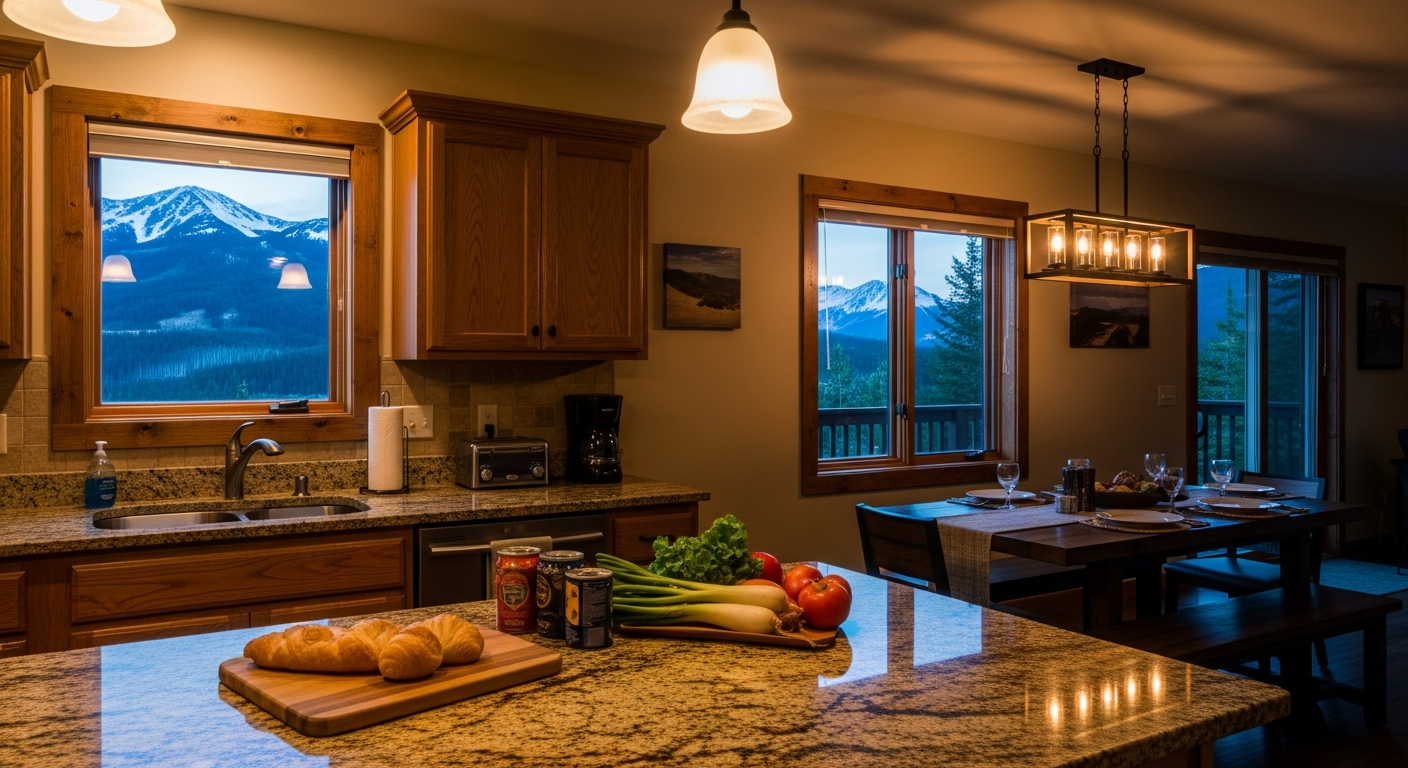
One of the strongest arguments for a condo over a hotel at Big Sky is kitchen access. On-mountain restaurant prices are steep — a family of four eating three meals a day at the resort can easily spend $250-$350 daily on food. A condo with a kitchen cuts that in half.
The catch: grocery options at Big Sky are limited. The Hungry Moose Market in the base village carries basics, but prices are 30-40% higher than Bozeman and the selection is thin. The smart move is to stock up at Costco, Town & Country, or Albertsons in Bozeman before driving up. Bring enough for breakfasts, lunches, and at least half your dinners. A cooler in the car handles the 45-minute drive without any issues.
Booking timing
Peak season at Big Sky (Christmas week, Presidents’ Day week, and MLK weekend) books out months in advance. For the best selection of genuinely ski-in ski-out properties, book 4-6 months ahead for holiday periods and 2-3 months ahead for regular peak season (January through mid-March).
Early December and late March are the value sweet spot. Rooms that run $700 in February drop to $350-$450, and the skiing is still excellent. Early December can be iffy on snow coverage, but late March usually has a deep base with warmer temperatures and longer days.
Is it actually worth the premium?
Here’s the honest take: ski-in ski-out matters most when conditions are bad. On a bluebird day, you don’t mind the five-minute walk. But when it’s negative 10 and blowing sideways, being able to duck into your room for a hot lunch and walk back out to the lift is transformative. If you ski hard for four or five days straight, the convenience compounds.
For a weekend trip, the premium probably isn’t worth it — you’re paying $200+ extra per night for maybe 20 minutes of saved walking. For a full week, the math tilts significantly toward slopeside. And if you’re traveling with young kids who need mid-day breaks, true ski-in ski-out isn’t a luxury — it’s a logistics requirement.
If staying in Bozeman and driving up daily is on the table, you’ll save significantly on lodging and dining. Just factor in the 45-minute drive each way and the very real fatigue of a long ski day followed by canyon driving.