Where to Stay in Bozeman: A Neighborhood-by-Neighborhood Guide
By Bozeman Proper Staff
February 10, 2026 · 12 min read
Bozeman is not a big city, but where you stay changes your trip entirely. The difference between downtown Main Street and a vacation rental south of town near Four Corners is the difference between walking to dinner and driving 20 minutes on a two-lane highway in the dark. Most visitors default to whatever Marriott or Hilton pops up first on their booking app. That’s fine if you want to sleep next to the interstate. If you want to actually experience the town, you need to think in neighborhoods.
Before you dig into zones, one thing to settle first: the hotel-versus-vacation-rental question. The short version is that hotels win for couples on short trips, and rentals win for groups of four or more staying four-plus nights. Cleaning fees in Bozeman routinely run $150-250, which destroys the savings on a two-night rental. But for a week-long family trip where you want a kitchen, laundry, and a yard for the dog? A rental is the clear play. The zone you pick matters almost as much as which type you book.
Downtown and the Historic District
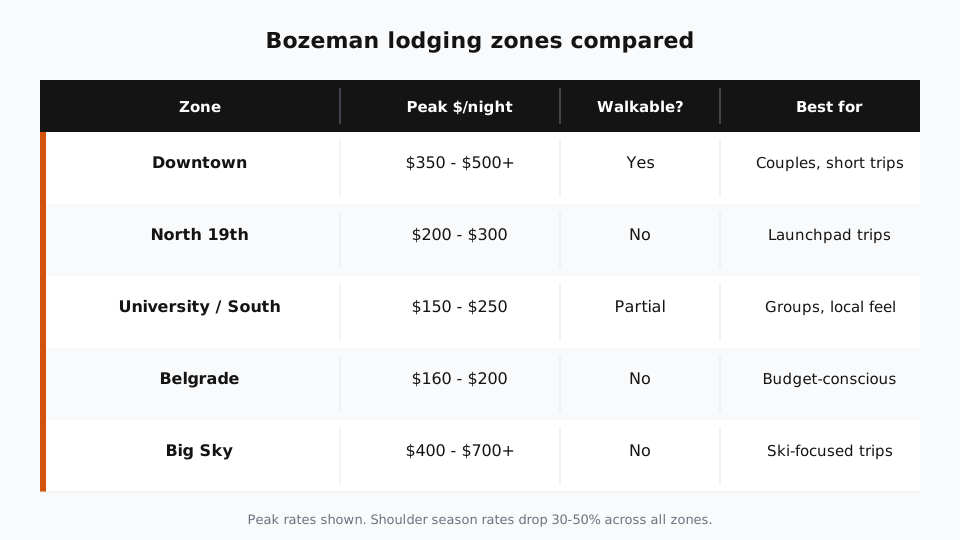
This is the only area where you can ditch your car entirely. Main Street runs east-west through the center of town, and within a six-block stretch you have Plonk, the Nova Cafe, Bozeman Brewing’s taproom, and enough shops to fill an afternoon. The walkability to Bozeman’s best restaurants is the single biggest advantage of staying downtown — you park your car the day you arrive and don’t touch it again until you leave.
The Lark and the Kimpton Armory are the two best hotels here by a wide margin. The Lark leans into a hip, motel-reimagined vibe with local art and curated adventure kits. Rooms start around $189 in the off-season and climb to $350-450 during peak ski weekends and July. The Armory is more polished, with a rooftop bar that has Bridger views. Expect $220-500+ depending on the season. The Element by Westin fills the extended-stay niche downtown with kitchenettes and a more modern, apartment-style setup.
Skip the generic chain options on North 7th unless price is your only concern — they’re technically close to downtown but the walk is along a charmless commercial strip.
Midtown and North 19th
The stretch along North 19th Avenue is where Bozeman stashes its big-box stores and most of its newer hotel inventory. You will find Residence Inns, Hampton Inns, a Comfort Inn, a TownePlace Suites, and a handful of others in this corridor. It is entirely car-dependent and architecturally forgettable, but the rooms are often $80-120 cheaper per night than downtown during ski season. A Hampton Inn that runs $169 in February might cost $249 at the Lark for the same dates.
If you are just using Bozeman as a launchpad for Big Sky or Yellowstone and plan to leave early each morning, this zone makes practical sense. You’re close to grocery stores, gas stations, and the interstate on-ramps. Just do not expect to enjoy the evenings here — you will be driving to Main Street for anything worth doing after dark.
Pet-friendly options are more common in this corridor than downtown. The Residence Inn and TownePlace Suites both accept dogs with a one-time fee (usually $75-100). The Lark downtown is also pet-friendly but charges per night, which adds up fast on a longer stay.
South Side and the University Area
Montana State’s campus anchors the south side of town, and the neighborhoods radiating from it have a distinctly different feel. More coffee shops than cocktail bars. More Subarus than lifted trucks. Vacation rentals in this area tend to be older bungalows with genuine character and walking distance to Peet’s Hill, one of the best short hikes in town for sunset views over the Gallatin Valley.
The trade-off is fewer hotel options and slightly longer drives to the interstate if you are heading to Big Sky. For summer visitors who want a local-feeling experience, this is the neighborhood I recommend most. Nightly rates for a two-bedroom rental here run $150-250 in summer, which is a genuine bargain compared to downtown hotel pricing for a group splitting the cost.
Belgrade: the budget play
Belgrade is 10 miles west of Bozeman and about five minutes from the airport. Most visitors do not even consider it, which is exactly why it works as a budget alternative. The Holiday Inn Express and La Quinta here consistently run $40-70 less per night than comparable rooms on North 19th, and $100-150 less than downtown. During peak ski season, when a basic chain room in Bozeman can hit $300, you can still find Belgrade rooms in the $160-200 range.
The drive from Belgrade to downtown Bozeman is 12-15 minutes on I-90. Not nothing, but not a dealbreaker either. You lose the ability to walk anywhere in Bozeman, but if you were staying on North 19th you were driving everywhere anyway. Belgrade has a few solid restaurants of its own, a decent brewery (Outlaw Brewing), and proximity to the airport means you are not scrambling for an early flight. For families watching the budget on a week-long trip, the savings add up to $300-500 over a stay, and that’s real money.
Big Sky: a different decision entirely
If your trip is primarily about skiing, staying at the resort instead of commuting from Bozeman changes the equation dramatically. The drive from BZN to Big Sky is roughly 50 miles of two-lane canyon highway. In good conditions it takes an hour. In a snowstorm, it can take 90 minutes or more. Doing that round trip every day of a ski vacation is exhausting and eats into your slope time.
Big Sky lodging breaks into three zones. Mountain Village is the slopeside base area with the Summit Hotel, Huntley Lodge, and a cluster of condos. It is the most expensive option ($400-700+ per night in peak season) but you’re steps from the lifts. The Meadow Village, five minutes downhill, has more affordable condos and vacation rentals in the $200-400 range, with a handful of restaurants and a general store. The Canyon area along Highway 191 between Bozeman and Big Sky is the budget tier, with a few older lodges and cabin rentals that can drop below $200 per night. You will need a car for all three zones — Big Sky is not a self-contained village.
For a first visit to Big Sky, staying in the Mountain Village for at least part of your trip is worth the cost. Slopeside access in subzero weather is a different category of convenience. For repeat visitors who know the mountain and don’t mind a short drive, Meadow Village rentals with a kitchen are the sweet spot.
West Bozeman and Four Corners
Unless you have a specific reason to stay out here — a wedding at a ranch venue, a multi-family reunion rental, or you found a screaming deal on a big house — skip this area. Four Corners is a rural intersection about 10 miles west of downtown that has grown into a loose cluster of gas stations and a few restaurants. The vacation rentals out here can be exceptional (river-front cabins, horse-property guest houses), but you are adding 15-25 minutes to every trip into town. It is the right call for maybe 10% of visitors and the wrong call for everyone else.
Seasonal pricing: what those “starting at” rates actually mean
When you visit determines your lodging costs more than which zone you pick. That “starting at $189” rate at the Lark? That’s a Tuesday in October or early November, after the fall colors have faded and before ski season opens. The same room in late January or mid-July can hit $400-450.
Here’s the general pattern. Peak winter runs from late December through mid-March, with the highest rates around Christmas week and Martin Luther King Jr. weekend. Peak summer is late June through August, when Yellowstone traffic is at maximum intensity. The shoulder seasons — April through mid-June, and September through early November — are where you find the real deals. A downtown hotel room that costs $350 in July might run $180 in September, and September is arguably the best weather month of the year.
The North 19th corridor and Belgrade hotels follow the same seasonal pattern but at a lower baseline. A $169 winter rate on North 19th might drop to $109 in October. Belgrade tracks $30-50 below that. If you have flexibility on dates, shifting your trip by even two weeks can save you $50-100 per night across the board.
The vacation rental question
The decision between a hotel and a rental comes down to three factors: group size, trip length, and whether you want to cook. Solo travelers and couples on trips of three nights or fewer should book a hotel almost every time. The cleaning fees on Bozeman rentals ($150-250) make short stays a bad deal. A $180-per-night rental with a $200 cleaning fee costs you $280 per night for a weekend.
For groups of four or more staying four-plus nights, a rental wins on both cost and livability. A three-bedroom house near the university that lists at $250 per night splits to $83 per person. A comparable hotel situation — two rooms at $200 each — runs $200 per person. The math only gets more favorable the larger the group and the longer the stay.
Cooking matters more than people think. Eating out for every meal in Bozeman will run $50-80 per person per day at the restaurants worth visiting. A vacation rental with a kitchen lets you do breakfast and lunch at the house and save the restaurant budget for dinners. Over a week, that’s hundreds of dollars back in your pocket.
For the full breakdown, including hidden fees and booking tips, read the Airbnb vs. hotel comparison.
Picking your zone
Downtown if you want walkability and don’t mind paying for it. North 19th if you need a cheap launchpad and your car is your social life. University area if you want a local feel and are booking a rental. Belgrade if budget is the priority and you’re comfortable with a short commute. Big Sky if skiing is the main event and you want to maximize slope time.
Don’t overthink it. The wrong neighborhood adds 15 minutes of driving to your day. The right one saves you $100 a night or lets you walk to dinner in the snow. Figure out what matters most to your trip and book accordingly.
Once you’ve locked in where to stay, the next step is building your daily plan. For a detailed look at the hotel-versus-Airbnb math, that guide walks through cleaning fees, breakeven points, and when each option wins. We’ll also be publishing one-day, weekend, and three-day Bozeman itineraries soon — where you stay shapes which itinerary works best, so having your zone picked first makes everything else easier.